Table of contents
- Pet boarding rate guide (Tokyo metro area)
- Top pet sitter matching apps in 2026
- Pet hotel vs. pet sitter: features, pros, and cons compared
- Popular pet care & hotel recommendations
- Requirements and regulations for using a pet hotel
- Pre-departure preparation checklist
- Frequently asked questions (FAQ)
When you’re away for an extended period — whether for travel, a business trip, or visiting family — finding the right place to leave your dog or cat can be a real challenge. The biggest question on most pet owners’ minds is: “How much does a pet hotel cost per night in Japan?”
In this article, we break down real boarding costs in urban areas like Tokyo in an easy-to-understand way. We also compare highly rated pet hotels with the increasingly popular option of an “in-home pet sitter,” covering the pros and cons of each so you can find the safest, most comfortable arrangement for your dog or cat.
Pet boarding rate guide (Tokyo metro area)
| Pet size | Weight guide | Economy | Deluxe |
|---|---|---|---|
| Small dog | Under 10 kg | ¥4,000 – ¥6,000 | ¥7,500 – ¥12,000 |
| Medium-sized dog | 10 kg – 20 kg | ¥5,000 – ¥7,500 | ¥9,000 – ¥15,000 |
| Large dog | 20 kg – 40 kg | ¥7,000 – ¥10,000 | ¥13,000 – ¥22,000 |
| Extra-large dog | Over 40 kg | ¥9,500 ~ | ¥20,000 ~ |
| Cat | Any weight | ¥3,300 – ¥5,500 | ¥7,000 – ¥12,000 |
*Pet hotel rates in Japan are generally calculated per night (based on a 24-hour period), but surcharges may apply during peak seasons such as Obon holidays and the New Year holidays. For pet owners looking to keep costs down while still getting personalized, attentive care, booking an individual sitter through a matching app — like the ones introduced below — has become an increasingly popular alternative.
Top pet sitter matching apps in 2026
Among pet owners who want cage-free care and want to avoid the risk of infection from contact with other dogs and cats, booking an individual sitter through an app is quickly becoming the norm. Here are the services currently attracting the most attention.
- Fluv: One of the most talked-about pet care platforms in Japan in 2026. You can easily book online 24 hours a day, and every registered sitter has passed thorough identity verification and strict pet care qualification screening. They also offer hourly dog walking services and in-home visits (pet sitting), making it a perfect fit for cats who don’t handle changes in environment well.
- Cosewa: A matching app covering all of Japan. You can filter and search for sitters who hold professional certifications such as “veterinary nurse” or “certified pet sitter,” in addition to comparing reviews and rates.
- Olive Sitter / sewakl: Premium, dedicated in-home pet sitter dispatch services. They have sitters who can provide veterinarian-supervised medical care, making them ideal for house-sitting for senior pets or those requiring nursing care.
Pet hotel vs. pet sitter: features, pros, and cons compared
There are major differences in the care environment and setup between traditional facility-based hotels and individual sitters booked through the digital platforms above. Let’s compare their strengths and weaknesses side by side.
| Comparison | Commercial pet hotel | Pet sitter |
|---|---|---|
| Care style | Cage or private room at a dedicated facility |
At the sitter’s home or the owner’s home |
| Staff-to-pet ratio | One-to-many (multiple pets cared for at once) |
Fully one-on-one (customized care) |
| Nighttime coverage | Often unstaffed at night (security cameras only) |
Sitter stays in the same room or nearby overnight |
| Main advantages | Modern facilities with webcams, climate control, and more |
Minimal environmental stress; walks and sleeping together possible |
| Main disadvantages | Emotional stress on dogs and cats from the change in environment |
Bookings fill up fast during holidays (Golden Week, Obon, New Year holidays) |
Popular pet care & hotel recommendations
Here is a roundup of trusted, safe pet care brands and representative boarding services that are chosen by many pet owners across Japan — especially in the Tokyo metro area and other major cities.
| Service | Type | Coverage area | Features & best for |
|---|---|---|---|
| Lucu | Pet hotel chain |
Tokyo / Kanagawa | Spacious glass-walled private rooms. Professional grooming salon on-site, with individual nighttime monitoring. Great for city-based pet owners. |
| D.C. Castle | Short & long-term pet hotel |
Kanto area chain | Offers monthly plans for long business trips, plus a senior dog home facility — a professional establishment with comprehensive care. |
| Fluv | Matching app |
Tokyo metro area, etc. | 24-hour online booking. Warm, one-on-one care from sitters who have passed rigorous qualification screening. Perfect for cats who don’t handle changes in environment well. |
| Cosewa | Matching app |
All of Japan | A trusted platform where you can filter nationwide sitters by professional certifications like “veterinary nurse” and schedule a meet-and-greet before booking. |
| Olive Sitter | Premium in-home sitter |
Central Tokyo | Offers veterinarian-supervised medical care. Ideal for house-sitting for senior pets or those requiring nursing care and medication. |
Requirements and regulations for using a pet hotel
Japan has very strict animal quarantine and hygiene standards. When using a hotel or sitter, you must present the following certificates (typically issued within the past year) in advance.
Rabies vaccination certificate (mandatory for dogs): Under Japan’s Rabies Prevention Act, dogs are required to receive a rabies vaccination once a year. You will need the vaccination tag issued by your local government (city/ward office) or a certificate from your animal hospital.
Combination vaccine certificate:
- Dogs: Proof of a 5-in-1 or 8-in-1 (or higher) combination vaccine.
- Cats: Proof of a 3-in-1 (or higher) combination vaccine.
Flea, tick, and heartworm prevention certificate: Your pet must have been treated with a vet-recommended preventive such as Frontline or NexGard within one month of the boarding date.
Spaying/neutering: At facilities that offer cage-free environments or play rooms where dogs interact, female dogs in heat are generally not accepted, and unneutered male dogs are typically required to wear a belly band.
Pre-departure preparation checklist
- Regular food (dog food/cat food): A change in environment can easily cause stress-related diarrhea or digestive issues, so portion your pet’s usual food into individual ziplock bags and pack enough for the length of the stay plus 2–3 extra days.
- Items with your scent: An old piece of clothing or towel that smells like you, a favorite bed, or a well-loved toy can go a long way in easing your pet’s separation anxiety.
- Pet health booklet (keep in your walk bag): Just in case of illness, have your vaccination certificates and the contact information for your regular animal hospital written down.
- Emergency contact: A phone number in Japan where you can be reached even while traveling or in flight.
Frequently asked questions (FAQ)
Q1: How much does a pet hotel cost per night in Japan?
A: Based on the latest 2026 rates, a cage-type room for a small dog or cat runs about ¥4,000 to ¥6,000 per night. For medium to large dogs, or if you’d like a spacious private room, expect to pay around ¥8,000 to ¥15,000 per night. Seasonal surcharges apply during major holidays such as New Year holidays and Golden Week.
Q2: Is it safe to use a pet sitter app in Japan for the first time?
A: Major platforms like Fluv and Cosewa require all registered sitters to undergo rigorous interviews, identity verification, and qualification screening. They also offer their own support systems (insurance) in case of accidents, and a mandatory pre-booking meet-and-greet where you can meet the sitter in person to check compatibility — so you can use these services with confidence.
Q3: Are there discounts for long-term stays (one week to a month or more)?
A: If you need long-term boarding for a business trip or hospital stay:
– Commercial pet hotels: Many offer “long-stay discounts” of 10%–20% off regular rates, though these may not apply during peak seasons.
– Individual sitters (homestay): Rates tend to be more flexible, and since your pet won’t be confined to a small cage for an extended period, a home-based sitter is recommended for pets that need long-term care.
Q4: For cats, which is better — a cat-only hotel or an in-home sitter?
A: Cats are very territorial animals and are prone to refusing food or falling ill due to changes in environment. Unless your cat is very sociable and comfortable anywhere, we strongly recommend an “in-home pet sitter.” A sitter visits your home for about 45–60 minutes each day to prepare meals, change the water, clean the litter box, and play with your cat — keeping stress to a minimum without changing their environment.
🐾 How to use a pet sitter with more peace of mind — and save money
Because pets can’t speak for themselves, the care you choose as their owner is everything.
That’s why your beloved family member deserves a trusted pet sitter.
🎁 We’ve prepared a special coupon from Fluv!Don’t miss this limited-time offer!
✨ First-time user exclusive coupon ✨
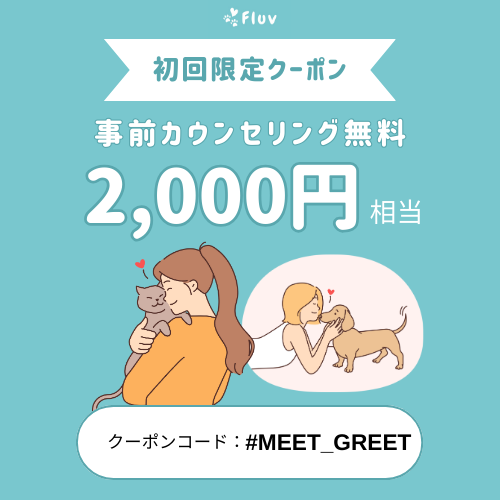
【Free pre-booking consultation (worth ¥2,000)】 Coupon code: [#MEET_GREET]
📲 Download now and find the perfect pet sitter for you!
🐾 Follow Fluv on social media!
On our official social media, we share adorable pet sitter diaries 🐶🐱, the latest campaign info, pet care tips, and more! Follow us so you never miss an update ♪
🐾 Check out our daily posts and pet sitter reports!
#CatSitter #DogSitter #PetLife
➡ Follow us here: https://www.instagram.com/fluv.jp/
Threads
🐾 A must-follow for cat lovers & dog lovers — packed with pet content!
➡ Follow us here: https://www.threads.com/@fluv.jp
LINE
🐾 Get exclusive deals on bookings and the latest campaigns via LINE!
➡ Follow us here: https://line.me/R/ti/p/@236fcisy?oat_content=url&ts=12031204