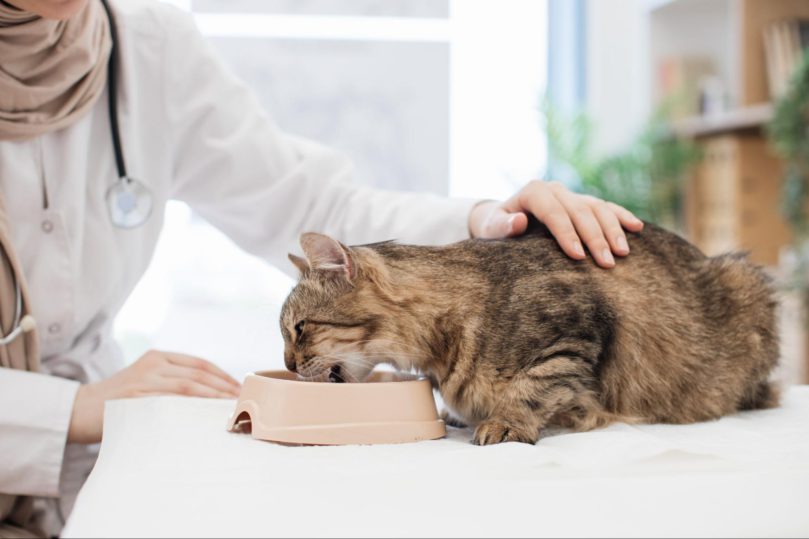
How much food should cats eat per day? A complete guide to cat feeding formulas and meal frequency!

Cat parents are always thinking about their fur babies’ wellbeing — especially when it comes to food. If you don’t want your cat looking like they’ve been left to fend for themselves, or worse, accidentally starving them, you’ll need to learn how much food cats should eat per day and how to choose the right food. Don’t worry if you’re a new cat parent — this article will walk you through how to figure out how many meals a day your cat needs, the formula for calculating portion sizes, and how to choose and serve cat food so your kitty can grow up healthy with a purrfect figure!
How to choose cat food? 4 things to look out for when picking cat food
One of the most important factors in your cat’s health is the food you choose. Just like the saying “weight loss is 70% diet, 30% exercise,” what your cat eats has a huge impact on their body condition and overall health. Choosing good food is essential for preventing potential health issues down the line. Here are 4 things to check before buying cat food!
1. Pay attention to protein content and source
Cats are obligate carnivores, so their bodies don’t need a high proportion of carbohydrates — protein is their primary nutritional source. The Association of American Feed Control Officials (AAFCO) recommends that adult cats get at least 26% of their daily intake from protein, while kittens need at least 30%. When choosing cat food, start by checking whether the protein percentage meets these standards.
You’ll also want to look at the protein source. Whole food ingredients are ideal, and these are usually clearly listed on the packaging — for example, chicken, scallop, or tuna. If the label only says things like “meat by-products” or “hydrolyzed protein” without being specific, that’s worth a closer look.
2. Choose food suited to your cat’s life stage
Cat food generally comes in formulas for all life stages, kittens, young/nursing cats, adults, and seniors. Each formula is adjusted to meet the needs of that life stage — kitten and nursing cat food, for instance, tends to be higher in calories and fat, while senior cat food is formulated with moderate protein and fat levels to account for a slower metabolism. It’s best to match the food to your cat’s current life stage.
3. Watch out for allergens
Just like people, cats can have food allergies. If you notice your cat reacting to certain ingredients, look for a “low-allergen” formula. Common allergens include dairy products, high-histamine fish like tuna and mackerel, and proteins like beef or chicken. You can try avoiding the trigger ingredients, or switch to a hydrolyzed protein or grain-free formula to see if the symptoms improve.
4. Choose a prescription diet if your cat has a health condition
You may have heard of “prescription diets” — these are foods specially formulated for cats with certain conditions or recovery needs. Common examples include urinary tract formulas and skin and coat formulas. Cats with reduced kidney function are often put on a low-phosphorus diet to ease the load on their kidneys.
※ It’s also worth noting that cat food comes in dry, wet, and fresh food varieties. Commercial dry and wet foods have generally passed safety testing, so they tend to be reliable choices. For fresh food, it’s best to consult a veterinarian to ensure it meets your cat’s nutritional needs.
How many meals a day should cats eat? A quick guide by life stage
Once you’ve chosen the right food, the next question is: how much should your cat eat, and how often? The quickest way to figure this out is by life stage. In general, it’s recommended to feed cats at least 2 meals a day, following a little-and-often approach. The number of meals can be broken down by age as follows.
| Kitten (8 weeks – 6 months) | Young/nursing cat, transitional stage (under 12 months) | Adult (1 year and older) | Senior cat (7 years and older) | |
| Meals needed | 4–6 meals | 3–4 meals | 2–4 meals | 3–4 meals |
| Reason | Kittens have small stomachs and high energy levels — eating too much at once can cause vomiting | As they transition to adulthood, meal frequency can gradually decrease to help prevent picky eating; high-protein, high-moisture food is still recommended | Once fully grown, you can reduce meal frequency or continue with smaller, more frequent meals to help prevent obesity | Senior cats often have reduced appetites, so more frequent meals make it easier to monitor their food intake and overall condition |
How much food should a cat eat per day? A breakdown of cat portion calculation

Just like humans have a basal metabolic rate, cats have their own calorie needs based on body weight. The basic formula is:
Daily food amount = daily calorie requirement ÷ food metabolizable energy
Using this formula, you can calculate exactly how many calories your cat needs each day — no more worrying about whether you’re overfeeding! Below we’ll explain how to calculate your cat’s daily calorie needs and what “metabolizable energy” means.
1. Daily calorie requirement = RER (resting energy requirement) × DER (daily energy factor)
A cat’s daily calorie needs work similarly to a human’s — they vary based on age, size, and lifestyle. A cat’s RER (Resting Energy Requirement) is their baseline calorie need; the DER (Daily Energy Requirement) is a multiplier that accounts for their activity level and condition. Just like elderly people need fewer calories due to lower activity levels, kittens, pregnant cats, and adult cats all have different energy needs — so the DER factor changes accordingly.
- RER is primarily based on body weight: RER = 70 × body weight (kg) × 0.75
- DER varies based on the cat’s condition: DER = RER × 0.8–2.5 (e.g., unneutered kittens = 2.5; pregnant cats = 1.6–2.0)
If the formula feels complicated, we’ve put together the table below — just look up your cat’s weight and their current condition to get a quick estimate of their daily calorie needs!
| Life stage | Daily calorie needs before 8 months (kcal) | Daily calorie needs after 8 months (kcal) | ||
| Weight (kg) | Weaned | Intact (unneutered) | Neutered/spayed | Overweight |
| 1 | 175 | 98 | 84 | 63 |
| 2 | 295 | 165 | 142 | 106 |
| 3 | 400 | 224 | 192 | 144 |
| 4 | 495 | 277 | 238 | 178 |
| 5 | 585 | 328 | 281 | 211 |
| 6 | 670 | 375 | 322 | 241 |
| 7 | 753 | 421 | 361 | 271 |
| 8 | 833 | 466 | 400 | 300 |
※ Every cat is different — the figures above are guidelines only. Please adjust based on your cat’s individual condition or consult a veterinarian for personalised advice.
2. Metabolizable energy = the calories in food that a cat can actually absorb and use
Metabolizable energy (ME) refers to the energy remaining after accounting for losses during digestion and absorption — in other words, the energy the cat can actually use. The formula sounds complex, but it’s straightforward:
ME (kcal/100g) = (protein 4 kcal/g × % + fat 9 kcal/g × % + carbohydrates 4 kcal/g × %) × digestibility 85% (may vary by food type)
For example:
A can of food labelled 15% protein, 5% fat, 8% carbohydrates:
ME (kcal/100g) = (4 kcal/g × 15% + 9 kcal/g × 5% + 4 kcal/g × 8%) × 85% = 1.1645 kcal/100g
Multiply that by the can’s total weight to find out how many calories the whole can provides!
3. Example: calculating how much to feed your cat
Let’s put it all together. How many cans of food does your cat need per day? Here’s an example using a 6 kg, neutered adult cat, eating a food with 161 kcal per 100g:
Answer:
A 6 kg neutered adult cat needs 322 kcal per day.
322 (daily calorie requirement) ÷ 161 kcal (metabolizable energy per 100g) = 2 cans
So this cat needs 2 cans of food per day!
Free feeding vs. scheduled meals — the age-old debate for cat owners
There’s a particular kind of exhaustion that comes from being yelled at by your cat for food — and if you’ve been around cats for a while, you’ve almost certainly heard the debate: free feeding or scheduled meals? This is one of the longest-running questions in the cat-owning world, and for good reason — both approaches have their pros and cons. Let’s break down why this debate is so hard to settle, and which method might work best for your cat.
1. Pros and cons of free feeding
Free feeding means leaving food in your cat’s bowl and topping it up when it runs out. The appeal of this method is that it mirrors a cat’s natural behaviour — cats are natural grazers who may eat upwards of 10 small meals a day, often taking a few bites and then running off to play. In that sense, free feeding is the most instinct-friendly approach.
However, the biggest downsides of free feeding are food freshness and monitoring. Even dry food can start harbouring bacteria within around 24 hours, and wet food has an even shorter window (roughly 3–4 hours). Free feeding also makes it harder to tell if your cat is overeating or losing their appetite.
2. Pros and cons of scheduled meals
Scheduled meals — the “how many meals a day” approach mentioned earlier — let you monitor your cat’s eating habits, control portion sizes, keep food fresh, and use mild hunger to reduce picky eating. It’s a popular and practical method for many cat owners.
The main downside is that overly strict meal schedules can leave cats feeling too hungry, leading to gulping food or even causing anxiety and stress. Other challenges include deciding who controls the feeding schedule and portions — and how to hold firm when your cat is howling dramatically at an empty bowl.
Whichever approach you choose, the key is to tailor it to your individual cat’s personality, habits, and health. You may need to adjust meal frequency, how often you refresh free-fed food, and other variables along the way — all of which requires careful observation on your part. When in doubt, asking your vet for guidance is always a great option.
Your cat deserves the best! Subscribe to Fluv and become a top-tier cat parent
Keeping your cat well-fed and healthy is no small feat. Between calculating daily calorie needs, choosing the right food, and figuring out a feeding routine, there’s a lot to manage. And when you need to head out, who’s going to take care of your cat? Fluv | Taiwan’s largest pet sitter platform offers comprehensive in-home cat sitting services — including feeding, cleaning, playtime, health updates, medication administration, and more. It’s the trusted choice for cat parents everywhere! Want to keep up with the latest cat care tips and become the ultimate cat parent? Subscribe to the Fluv newsletter now and stay in the know. Your cat deserves the best — and so do you!
Fluv exclusive deals | Limited-time offers for devoted pet parents
#Give your pet the best — give them what fits them most
If you’d like a more personalised, home-like care experience for your pet, why not try Fluv’s in-home pet sitter service?
🎁 New users: enter promo code
#UNEW95
Book now and enjoy 5% off your first booking!
👉 Looking for a caring, professional pet sitter for your furry friend?
Views: 8624
 English
  Chinese