
Table of contents
- What is canine cognitive dysfunction syndrome? A condition that may begin at age 7
- 8 signs your dog may be developing dementia
- Why do dogs develop dementia? 2 possible reasons
- What we can do when early signs appear: prevention and treatment
- How to care for a dog with dementia
- How Fluv can help you be there for your dog
- Fluv deals — limited-time offers for devoted pet owners
Is your aging dog starting to act strangely — circling around the room or not responding when you call their name? You might be wondering if these are early signs of dog dementia. Just like people, dogs can develop cognitive decline as they age. The sooner you understand what causes it and how to prevent it, the better your chances of slowing its progression. And if your dog is already showing signs of dementia, we’ve put together a guide on how to care for them — so you can walk alongside them with love and compassion through every stage of life.
What is canine cognitive dysfunction syndrome? A condition that may begin at age 7
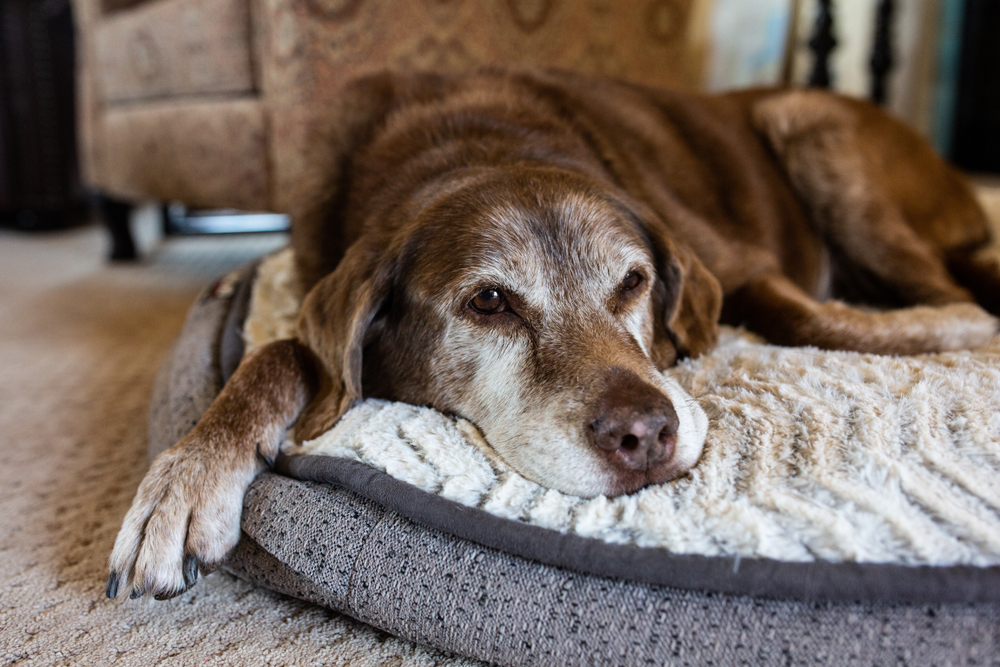
Dog dementia is formally known as Cognitive Dysfunction Syndrome (CDS). Dogs are considered seniors from around age 7, when early signs of cognitive decline may begin to appear. Symptoms often worsen after age 10, affecting intellect, memory, and physical function due to declining brain function. This can lead to noticeable behavioral changes — dogs may no longer recognize their owner’s scent or face, and may become irritable or withdrawn, significantly affecting their relationship with their family.
8 signs your dog may be developing dementia
As a dog’s brain function declines, unusual behaviors can signal what’s happening. If your dog is over 7 years old and seems different from usual, check whether they’re showing any of these 8 early warning signs.
Sign 1: Staring blankly at walls or spacing out
Dogs generally love interacting with their owners and going out to play. But a dog showing early signs of dementia may withdraw from people and activities, spending long stretches staring at the wall or simply zoning out — losing that lively, energetic spark they once had.
Sign 2: Eliminating in random places or becoming incontinent
Dogs typically do their business in consistent spots, but cognitive decline can affect memory, causing them to forget where they were trained to go. In more serious cases, it can also impact physical control, leading to accidents during sleep and soiling their own bed.
Sign 3: Getting lost or confused about their surroundings
A dog with dementia may lose their sense of direction — forgetting the layout of the home or familiar walking routes. They may become reluctant to go out, or find themselves stuck in a corner at home, unable to find their way to where they want to go.
Sign 4: Repetitive, purposeless circling
One of the more distinctive signs of dog dementia is compulsive circling. It may start with wide loops and gradually tighten, with the most severe cases involving spinning in tight circles around themselves.
Sign 5: Sleeping more and having a reversed sleep cycle
Dogs with cognitive decline tend to sleep much longer than usual and may flip their sleep schedule — dozing through the day and then waking repeatedly at night, sometimes getting up to wander or circle.
Sign 6: Changes in appetite but losing weight
A dog that once ate regular meals at regular times may start seeming ravenous — eating as if they’ve forgotten they just had a meal. At the same time, as the body’s ability to digest and absorb food declines, they may actually lose weight despite eating more.
Sign 7: Increased aggression
As the brain deteriorates, serotonin levels drop, and the world can feel increasingly unfamiliar and disorienting. This can make a dog irritable and reactive. If your normally gentle dog has recently started showing unusual mood swings or aggression, it could very well be an early sign of dementia.
Sign 8: Forgetting commands and not recognizing their owner
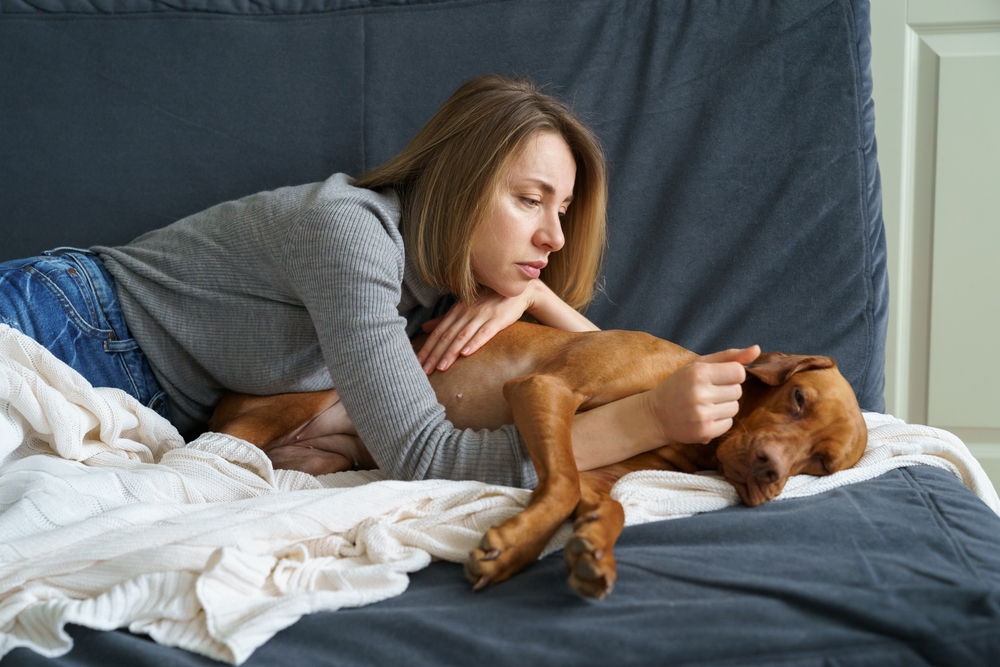
Perhaps the most heartbreaking sign of dog dementia is forgetting the commands you patiently taught them — and eventually no longer recognizing your face or your scent. When you call their name and they don’t respond, it may be because they’re truly starting to forget you.
Why do dogs develop dementia? 2 possible reasons
Since none of us want to see our dogs experience dementia, it helps to understand what causes it in the first place. Here are two possible contributing factors.
1. A routine that’s too monotonous
If a dog’s daily life is overly repetitive — mostly staying at home, interacting only with their owner, with little contact with other people, dogs, or animals — their brain doesn’t get enough stimulation. Without regular mental engagement, the brain can deteriorate faster over time.
2. Natural brain cell decline
Dogs live on average 13 to 20 years, and by age 7 they’re already considered seniors. By 10, they’re roughly equivalent to a person in their 70s. Brain aging is inevitable — but if owners aren’t attentive to providing proper nutrition and care to keep their dog healthy, cognitive symptoms may develop earlier than they otherwise would.
What we can do when early signs appear: prevention and treatment
We can’t stop our dogs from getting older, but we can give their brains the stimulation and nutrition they need to stay sharp for longer. With advances in veterinary medicine, there are also several treatment options available when dementia does occur — so don’t be discouraged.
1. Supplement with brain-supporting nutrition
To slow brain aging, focus on antioxidant-rich foods such as broccoli and blueberries, which are high in vitamins B, C, and D, as well as omega-3 fatty acid sources like sardines and mackerel. Dog-specific nutritional supplements can also be a helpful addition to their diet.
2. Keep up regular exercise
Exercise helps slow memory decline and keeps the brain active — which is one of the best defenses against dementia. Don’t skip those daily walks out of convenience. Regular movement and outdoor activity are good for both your dog’s brain and your own.
3. Get a comprehensive physical and cognitive evaluation
Because some dementia-like behaviors can also be caused by other conditions, a vet will typically start by asking about your dog’s symptoms, then conduct a full physical exam, neurological assessment, and blood and urine tests. More advanced diagnostics may include brain imaging such as MRI or cerebrospinal fluid analysis. Tools like the Canine Dementia Scale or the DISHAA cognitive dysfunction assessment can help determine the degree of cognitive impairment.
4. Consider medication
There are two main categories of medication for canine dementia. The first is Selegiline, which indirectly increases levels of neurotransmitters and dopamine in the brain. The second includes Nicergoline and Propentofylline, which promote blood flow to the brain and help slow the progression of cognitive decline. Please consult a qualified veterinarian for guidance on medication options.
How to care for a dog with dementia
A dog who has been with you for over a decade is now changing — their behavior is different, they may be moody, and they might not recognize the family they’ve always known. Even so, we can do our best to care for them through their later years and help them live comfortably alongside cognitive decline.
Care tip 1: Set up more water bowls and toilet areas
As memory fades, dogs may forget where their water bowl or usual toilet spot is. To prevent dehydration and accidents, place water bowls and pee pads or toilet areas throughout the home so your dog can easily access them wherever they happen to be.
Care tip 2: Add soft padding and anti-slip measures
Senior dogs often deal with joint issues alongside cognitive decline, and confusion increases the risk of bumping into walls or falling. Consider laying down non-slip mats or rugs throughout the home, and attaching corner protectors to walls and furniture to keep your dog safe.
Care tip 3: Provide more stimulation and retraining
It’s okay if they’ve forgotten old commands — you can teach them again. Introduce puzzle feeders, reward-based training with treats, and increase daytime activity and exercise. This not only keeps their mind engaged but also helps with nighttime restlessness and waking.
Care tip 4: Spend more quality time together
Watching your dog go through dementia is genuinely difficult, and the extra care it requires can be exhausting. But this is exactly when your dog needs your presence most. Petting, hugging, and talking to them regularly can lift both their spirits and yours — and staying emotionally connected has a genuinely positive effect on their wellbeing too.
How Fluv can help you be there for your dog
We know you’d love to spend as much time as possible with your dog — but a busy work schedule makes it hard to always be by their side. Fluv has over 5,000 verified pet sitters who offer both short-term and long-term care, providing companionship, play, and gentle mental stimulation for senior dogs — so they always feel loved, stay healthy, and age gracefully. Download the Fluv app now and find the perfect sitter for your dog.
Fluv deals — limited-time offers for devoted pet owners
#Give your pet the best — and that means the right fit for them
Does your senior dog need someone with them throughout the day? Find their perfect sitter on Fluv!
🎁 New users: enter promo code
#UNEW95
Book now and get 5% off your first booking!
👉 Ready to find a caring, professional pet sitter for your dog?
 Fluv founder Candace Chen
Forbes 30 Under 30 Asia | 2024 Tatler Gen.T Leaders of Tomorrow
As the founder of Fluv, Candace has brought exceptional business vision and execution to building the largest and most trusted pet care platform in Taiwan.
- Recognized on world-class lists: named to Forbes 30 Under 30 Asia and selected as a 2024 Tatler Gen.T Leader of Tomorrow.
- Backed by leading investors: secured investment from Twitch co-founder Kevin Lin and influential venture firm SIC.
- Market leader: Fluv now brings together over 7,000 vetted professional sitters and has earned the trust of 140,000 members.
To learn more about the importance of exercise and caring for an aging dog, check out:
Views: 23790
 English
  Chinese