Table of contents
Are you based in Xindian or Ankeng? Every time you need to travel, the hardest part isn’t booking your ticket — it’s figuring out where your furry companion is going to stay. You want pet boarding that’s cage-free, has someone watching over them around the clock, and has solid reviews. But once you start searching, the choices are overwhelming: should you go with a pet hotel, or opt for something closer to everyday life with home-style boarding? This post rounds up the most up-to-date Xindian and Ankeng pet boarding recommendations for 2026, and walks you through the differences between dog and cat needs, price ranges, and exactly what to ask and look for. By the end, you’ll feel like you’re making an informed choice — not just crossing your fingers.
How to choose between a pet hotel and home-style boarding
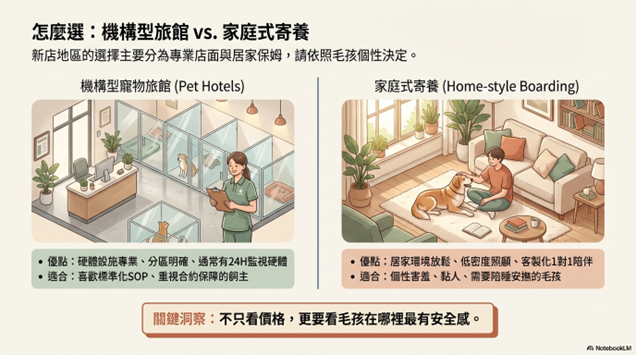
Before deciding between a commercial pet hotel (storefront operation) and home-style boarding (at a sitter’s home), the most important thing is to start with your own pet’s needs and match them to your options. Use these 6 key criteria to make sure your pet’s personality fits the environment — and that they’ll be comfortable:
- Personality fit: Your pet’s temperament should guide the type of care you choose. Shy or home-loving cats and dogs do best with in-home care or a home-style sitter environment with a single caregiver. Outgoing, adaptable pets can be compared across professional hotels or boarding homes. Older pets or those that need medication require extra attention to the caregiver’s experience and ability to handle medical situations.
- Space and zone density: Find out how many pets the facility takes in at once and how the space is divided. Larger floor plans with sensible zoning and fewer simultaneous boarders are ideal. Cats in particular dislike disruption — private rooms help reduce stress. Dogs need enough room to move around without being cooped up in a cage for long stretches.
- 24-hour staffing and monitoring: Ask whether someone is on-site at all times, or at least whether there’s a nighttime check-in routine. Many places advertise 24H care, but in practice only have cameras with no one on duty overnight. Make sure there’s a real person available to handle emergencies at night. Facilities with live video feeds or regular check-in updates are a plus, so you can always know how your pet is doing.
- Room type and outdoor space: Understand what room types the facility offers (private suite vs. open area) and whether outdoor walks or play areas are available. A cage-free setup is a bonus for active dogs, and a yard or outdoor area is even better. Cats, on the other hand, value a quiet, private space with vertical elements like cat trees and climbing platforms. If a facility highlights high ceilings, tiered spaces, or dedicated cat pathways, that’s usually a good sign it’s cat-friendly.
- Daily updates and interaction: Quality boarding providers send daily photo or video updates covering your pet’s eating, drinking, bathroom habits, and overall mood. Look for services that include playtime and social activity so your pet doesn’t get bored. Real-world examples show some facilities send daily photos and videos, take pets out for walks, and even have pets reluctant to leave by the end of their stay — enjoying more toys and attention than they get at home, and still wanting more when it’s time to go.
- Convenience and pickup/drop-off service: Being close to home is convenient, but safety and reliability matter more. Some Xindian pet hotels offer pickup and drop-off or pet taxi services. If you need transport, always confirm the safety measures used during transit (such as securing airline-approved crates and escape prevention). Convenience is a nice bonus, but never compromise your pet’s safety just to save a little effort.
These criteria will help you quickly filter down to the right cage-free pet hotel in Xindian or boarding sitter. Before booking, it’s always worth visiting in person to assess the environment and gauge the staff’s professionalism — don’t be dazzled by fancy marketing. As long as you apply the same consistent checklist (environment separation, reporting system, medical protocols, contract terms, etc.), you’ll dramatically reduce the risk of a bad experience, whether you go with a hotel or a home-style sitter.
Top pet hotel picks in Xindian
Below is a curated list of well-regarded pet boarding options in Xindian and the Ankeng area (suitable for both dogs and cats). The list includes platform-based sitters and local hotels, covering features like cage-free environments and 24H care. Use the service type, environment highlights, and pricing to find what fits your needs. Starting prices and website/social links are included where available, and some listings note their Google review ratings:
| Name / platform | Area | Type | Cage-free | 24H staffing | Outdoor space | Starting price (dog/cat) |
| Fluv in-home sitter – Rita |
All of Xindian | Home-style / platform sitter | Yes | Full-time sitter, always present | 5-ping balcony | From $600/day |
| Ricky Martin Pets (formerly Laiwang Pets) |
Near Xindian District Office |
Pet hotel (storefront) |
Yes (dogs and cats in separate rooms) | Remote monitoring at night | No outdoor area; indoor activity space | Small dog from $600; Cat from $400 (est.) |
| PAWS FUN | Xindian, Huanhe Road |
Pet hotel (storefront) |
Yes | Staff on-site at night | Yes, daily walks | Small dog from $700; Cat from $500 (est.) |
| Jinjier Pet Salon & Hotel |
Ankeng, Ankang Road Section 2 |
Grooming salon + hotel | Partially cage-free | No overnight staff | No outdoor area | Small dog from $600; Cat from $450 (est.) |
| Maoyu Pets Wonderland | Xindian, Zhongxing Road Section 2 | Pet hotel (dogs only) |
Yes | Staff on-site overnight | Indoor play area | Small/medium dog from $800 |
The list above covers a range of types and budgets for Xindian pet boarding. If you prefer a home-like environment, consider a one-on-one boarding sitter through the Fluv platform. For a cage-free pet hotel, PAWS FUN and Maoyu are both highly rated options.
Based on reviews, many of these facilities have earned 4.5 stars or above (PAWS FUN has 78 reviews at 4.8★; Pet Park Xinzhong even has nearly 200 reviews at 4.6★). We recommend shortlisting 2–3 options based on your pet’s needs, visiting in person or having a detailed conversation with the provider, and then making your final call. If you find a provider through the Fluv platform, it means their service has passed a vetting process, and you’ll also have access to booking support and insurance coverage for extra peace of mind.
Pet boarding differences: dog hotels vs. cat hotels
The care needs of dogs and cats during boarding have always been quite different. Here’s a breakdown of the differences in layout, socialization needs, hygiene, and zoning — so you can judge what kind of environment is right for your pet.
What dogs need in a boarding environment
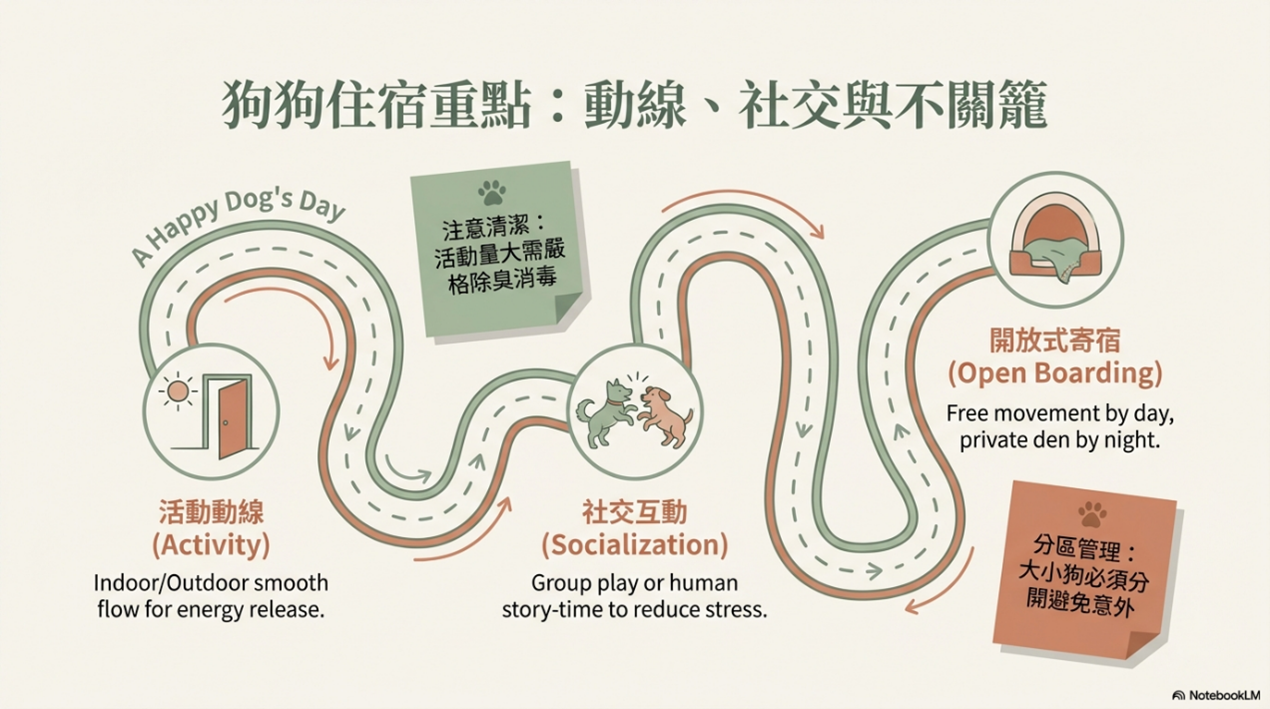
Dogs love activity and company, so their boarding environment should have open, easy-to-navigate spaces where they can run and play. Kennels should ideally have both indoor and outdoor activity areas to allow for daily walks and off-leash time. Socially, most dogs enjoy interacting with other dogs — daycare-style programs can help them make friends and unwind with music or calming activities.
Dog hotels typically schedule group play sessions or have sitters set aside regular one-on-one play time to keep dogs emotionally balanced. On the hygiene side, since dogs spend time outdoors, they may bring in dirt or develop odors, so facilities need to clean the environment daily and disinfect regularly.
In terms of zoning, dogs are commonly separated by size and temperament — large and small dogs board and exercise in separate areas to prevent size-related incidents. The space prioritizes openness for movement while using fencing to keep things safe. Many dog hotels also operate as open boarding setups (dogs roam freely during the day and each has their own sleeping spot at night), giving them a home-like feel and keeping them relaxed. Home-style boarding sitters take this even further — your dog gets to stay somewhere that genuinely feels like a home, with family-style care and companionship.
What cats need in a boarding environment
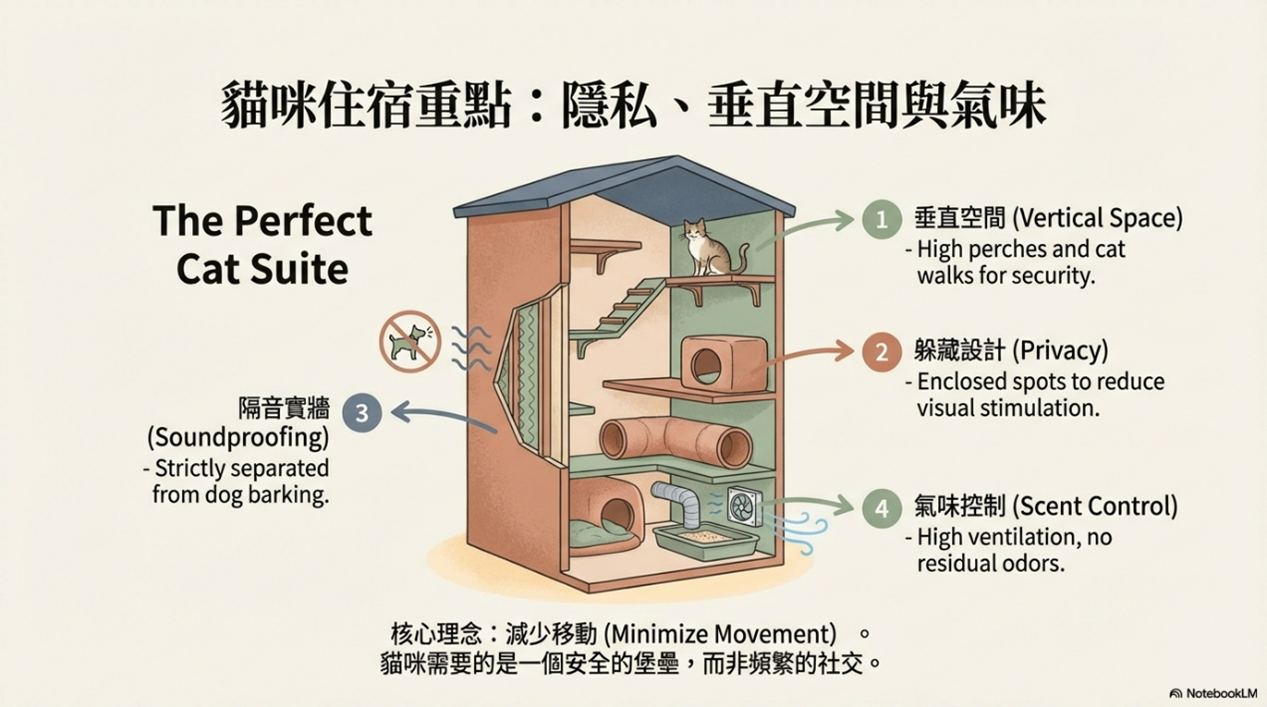
Cats are naturally independent and sensitive — quiet and privacy are their top priorities. Cat boarding environments should minimize movement and disruption. The ideal cat hotel provides private rooms or enclosed cat suites with solid walls on all sides, giving each cat their own personal space without interference from other animals.
Socially, most boarded cats don’t need interaction with other cats — in fact, it’s better to minimize visual and auditory stimulation as much as possible. Good cat hotels strictly separate dogs and cats by building or floor to prevent barking from startling the cats. Cats from different households are also housed separately, or a rotational free-roam schedule is used to ensure each cat gets alone time.
Cleanliness is absolutely critical: cats are extremely sensitive to smell, so rooms must be free of lingering odors. Facilities should change litter frequently, disinfect daily, and keep the air fresh and irritant-free. In terms of layout, cats love vertical space and hiding spots — high-quality cat rooms include climbing trees and cat nooks for them to perch and retreat.
Overall, the goal of cat boarding is to minimize stress — through private, quiet spaces, scent control, and soundproofing, so your cat feels like they have their own cozy suite while waiting for you to come home. And for cats who really struggle with change, the best option of all is staying in their own home with a trusted caregiver looking after them.
Further reading: [2026 updated] How to choose a cat hotel — room types, cleanliness standards, and pricing explained
Xindian pet boarding costs and common add-on fees
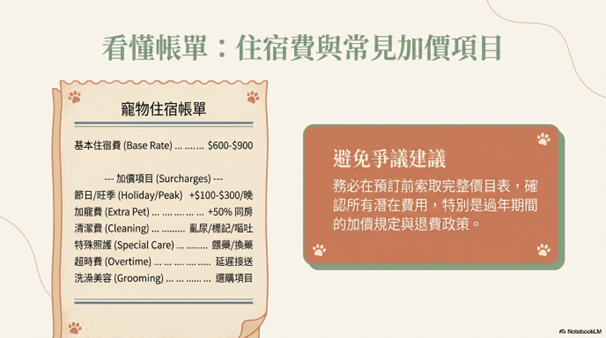
When your pet stays overnight, the total cost is usually made up of a base rate plus add-ons. Here’s a breakdown of common extra charges for dog and cat boarding, so you can plan your budget:
- Room type / size / peak season surcharges: Base rates at pet hotels are typically calculated by dog size or cat room type. As a general price guide, small dogs run around NT$600–900 per 24 hours, medium to large dogs NT$800 and up; standard cat rooms average $300–500 per night, with private suites starting at $700+. During peak periods like Lunar New Year, most places charge an additional NT$100–300 per night, and some require a minimum number of nights or a deposit. Peak-season surcharges are very common — always ask about them and confirm the cancellation/change policy before booking.
- Additional pet fees: If multiple pets from the same household are sharing a room, a per-additional-pet fee usually applies from the second pet onward (for example, 50% of the base rate or a fixed amount). Multi-pet households should clarify the room capacity and fee structure upfront. Home-style boarding, where the number of pets cared for at one time is limited, may be more flexible for families with multiple pets — pricing can often be negotiated.
- Cleaning and special care fees: If your pet causes damage or unusual messes beyond normal wear (such as frequent accidents, vomiting, or territory-marking), the facility may charge an extra cleaning or deodorizing fee. Some hotels also charge a premium for unneutered male dogs due to the likelihood of marking behavior. Pets that require medication, wound care, or other special attention may also incur daily care fees ranging from a few dozen to a few hundred dollars — be sure to have this spelled out in the contract.
- Overtime and extended stay fees: Pet boarding is typically priced in 24-hour increments, and going over the agreed pickup time may result in overtime charges. For example, if checkout is by 2pm and you don’t pick up until the evening, you may be charged for an extra half day or full day. Plan your itinerary carefully, and if your flight could be delayed, coordinate with the facility in advance for flexible pickup arrangements to avoid surprise fees.
- Bath and grooming services: Many pet owners like to have their pet bathed and groomed before picking them up. This is usually not included in the boarding rate and is priced separately. Costs vary by pet size and coat condition — small dog baths start around $500, while large dogs can run over $1,000; cats are priced by service (bath or shave). Some hotels offer bundled deals for longer stays, such as a discounted bath after a minimum number of nights — worth asking about at the time of booking.
Whatever type of boarding you choose, always ask for an itemized price list or contract upfront so there are no surprises at checkout — nobody wants to discover unexpected charges after the fact.
Further reading: How is long-term pet boarding priced? From one week to a year — home-style boarding costs and contract essentials explained
Pet hotel check-in requirements and safety checklist
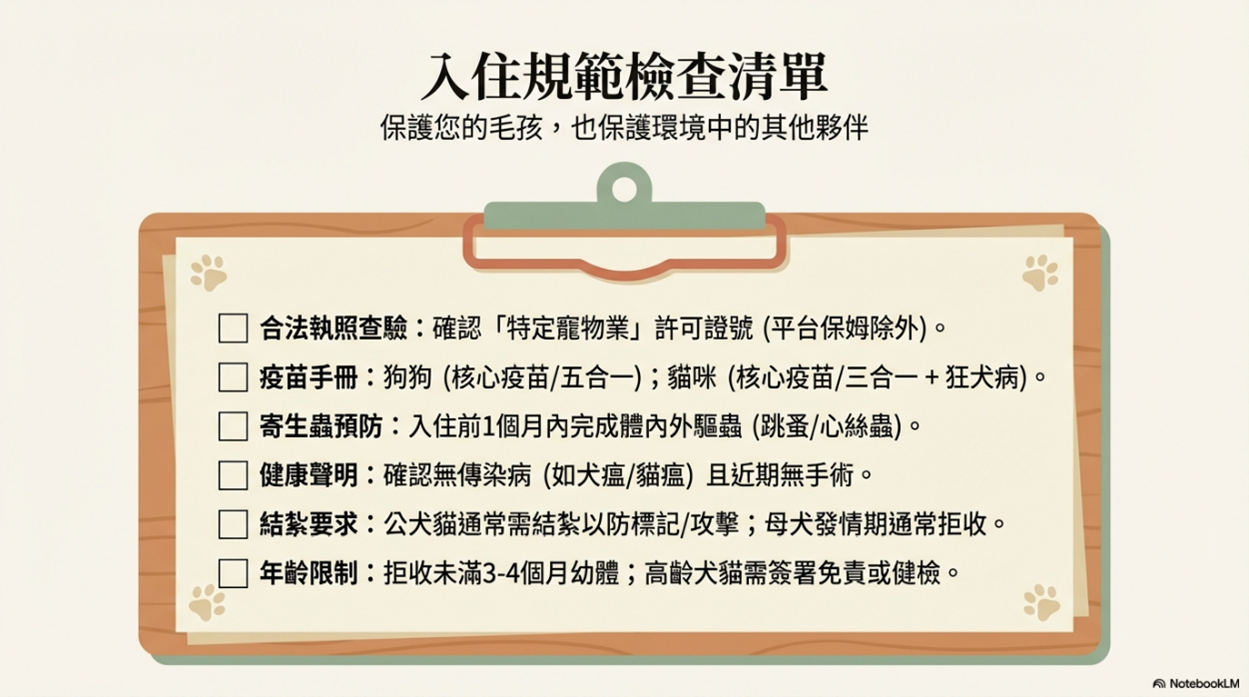
To protect the health and safety of all animals in their care, most boarding facilities have a set of admission requirements and safety checks that need to be met before your pet can check in. Here’s what both you and the facility need to prepare and be aware of:
- Vaccination and deworming records: A vaccination booklet is the baseline requirement for check-in. Dogs typically need core vaccines such as the 5-in-1 to be current; cats need the 3-in-1 and a rabies vaccination from within the past year.
In addition, internal and external deworming must be completed within one month prior to check-in (such as heartworm prevention medication or flea treatment) to avoid introducing parasites into the boarding environment. Some hotels will check for fleas at check-in and may require on-the-spot treatment if found, with an additional deworming fee charged. - Health declaration and medical history: Owners are typically required to sign a pet health declaration disclosing their pet’s recent health status. Pets with contagious diseases are strictly prohibited from boarding — this includes conditions like canine distemper, canine parvovirus, feline panleukopenia, or feline infectious peritonitis. Pets that have had surgery within the past 7 days or have unhealed wounds should also not be boarded. Pets with chronic conditions or special care needs must be disclosed in advance to confirm the facility can accommodate them (such as administering medication on schedule or monitoring appetite and bathroom habits). Some hotels may require an additional liability waiver or care fee for pets needing medication — make sure this is clearly stated in the contract.
- Neutering and heat cycle policies: Most boarding facilities require male pets over 6–8 months of age to be neutered before they can check in, to prevent territory-marking or aggressive behavior. Female dogs and cats in heat are typically not accepted, or come with extra cleaning fees and strict isolation requirements, as the scent and behavior of a pet in heat can agitate other animals in the facility. If your pet is not yet spayed or neutered, be upfront about it before booking and ask what options are available — you don’t want to be turned away at the last minute.
- Age restrictions: Puppies and kittens have underdeveloped immune systems, and most facilities will not accept animals under 3–4 months of age (they must complete their basic vaccination series first). For senior pets, those over 12 years old may be required to provide a recent health check report or sign a health liability waiver to clarify responsibility in the event of a sudden illness. Choosing a hotel with a partnering vet is especially reassuring for senior or post-recovery pets.
- Contracts and liability terms: Before check-in, you should sign a boarding contract or platform booking agreement that clearly outlines the responsibilities of both parties during the stay. This should cover things like: the process for notifying owners and seeking veterinary care if a pet becomes ill or injured, who covers medical costs upfront, and how liability is determined in the event of an unforeseen incident (such as a pet going missing or passing away).
Nobody wants things to go wrong, but getting the worst-case scenarios down in writing ahead of time prevents disputes later. There have been documented cases of boarding disputes escalating into serious conflicts simply because the contract didn’t spell out responsibilities — so don’t overlook the fine print.
Professional, responsible facilities will typically walk you through all of these points proactively and check them off at drop-off. As a pet owner, come prepared with your pet’s daily supplies, food, bedding, and favorite toys to send along for the stay. When both sides do their homework, the boarding experience is much smoother and less stressful for everyone.
Long-term boarding tips: thoughtful ways to reduce risk
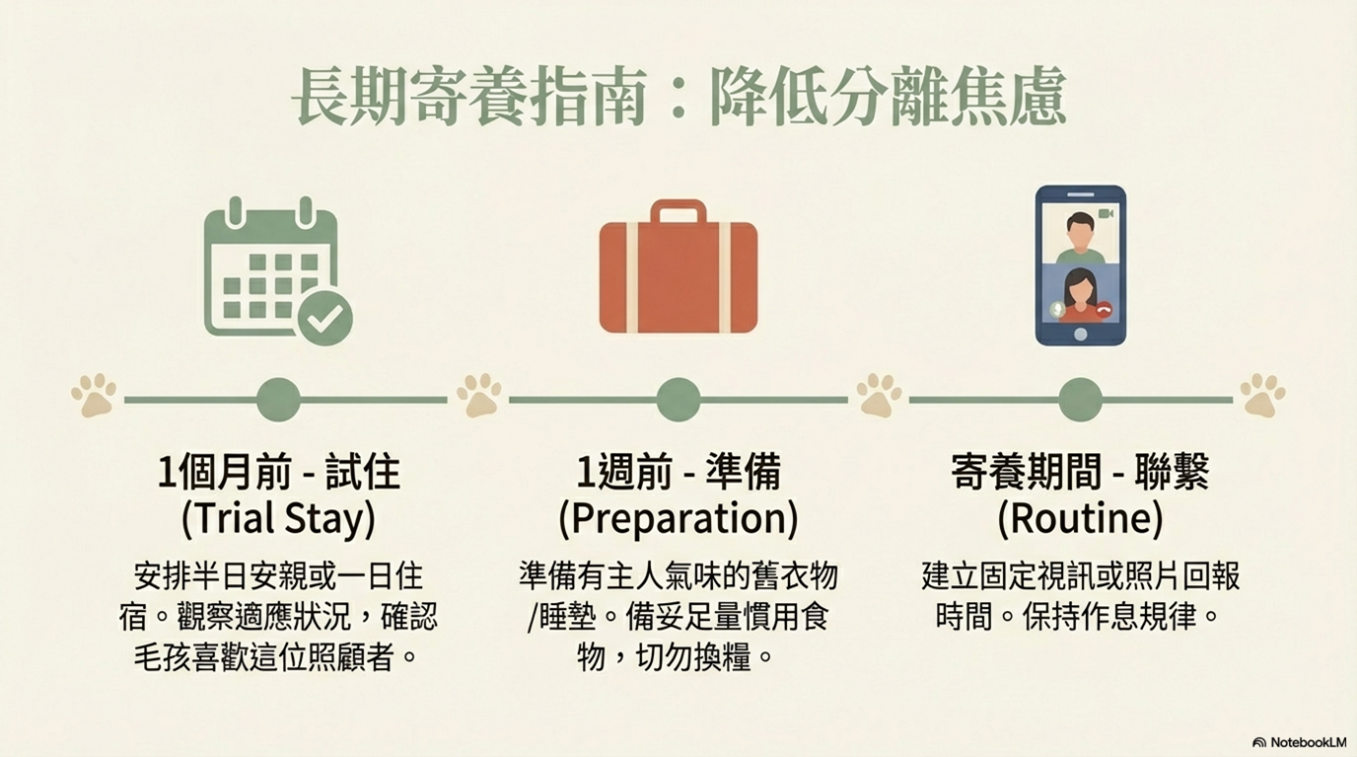
When you need to arrange long-term boarding for your pet (several weeks or even months), careful planning becomes even more important to minimize stress and reduce the risk of something going wrong. Here are a few tips:
- Do a trial stay first, and ease into it: If you’re planning an extended boarding stay, it’s worth arranging a trial stay or a daycare visit first. Let your pet briefly experience the boarding environment, see how they adjust, and then decide whether to commit to a longer placement. Some quality facilities actually require first-time long-term boarders to attend a few days of daycare before the full stay begins (for example, Ricky Martin Pets requires a half-day orientation before a first overnight stay). Trial stays let your pet get familiar with the caregiver and the environment’s scents, which helps reduce anxiety when the longer stay begins.
- Find a caregiver your pet genuinely clicks with: Long-term boarding makes compatibility between pet and caregiver even more important. When comparing sitters or hotels, bring your pet along for a visit to each one. Watch how your pet reacts to the environment and the caregiver, and go with the option where they seem most relaxed and at ease. One owner shared that because their cat was particularly shy, they ultimately chose a small-scale home-style boarding setup — and it turned out to be a much better fit. The key is matching the environment to your pet’s personality. Don’t be afraid to take your time — it’s worth finding the right match before committing to a long-term arrangement.
- Bring familiar items and maintain their routine: To ease your pet’s homesickness and anxiety, always bring along items that carry your scent for long-term stays — a sleeping mat, toys, or an old piece of clothing can give your pet a sense of security. Also ask the caregiver to keep your pet’s usual schedule and diet consistent: bring enough of their regular food and treats, and never switch brands mid-stay, as sudden diet changes can cause digestive issues (there have been cases of pets getting diarrhea because the boarding facility swapped their food). If your pet has a fixed walk or play schedule, ask the sitter to follow it as closely as possible so your pet feels like life hasn’t changed too drastically.
- Set up regular updates and a check-in routine: When you’re away for a long time, knowing how your pet is doing is what matters most. Agree with the boarding provider on a reporting frequency and format upfront. Ideally, you’ll get a daily text or photo update — or even a video call so you can “visit” remotely. Many boarding facilities proactively share video clips or camera links, which is invaluable for long-term placements. If you have the chance to return mid-trip, you can also pre-arrange whether to visit your pet or bring them home briefly (take your pet’s cues on this — some cats may become more anxious after seeing you only to be separated again).
Have a backup plan: Long-term boarding comes with more variables, so it’s smart to have a Plan B ready. For example, ask around in advance whether there are other sitters or hotels nearby who could step in on short notice (in case your original provider has an emergency and can’t continue), or consider getting pet insurance to cover medical risks during the boarding period.
Fluv special offers | Limited-time deals for devoted pet owners
#Give your pet the best — and the best fit
Now that you’ve seen the price comparisons and recommended options for pet boarding in Xindian and Ankeng, if you’re looking for a more personalized, cage-free experience for your pet — at a friendlier price than a traditional hotel — Fluv’s home-style pet sitter service is well worth a try.
Let your pet feel completely at home at their sitter’s place, enjoying one-on-one dedicated attention. That’s the warmest promise we make to every pet in our care.
🎁 New members: enter promo code
#UNEW95
Book now and get 5% off your first booking!
👉 Ready to find the perfect caring pet sitter for your furry friend?
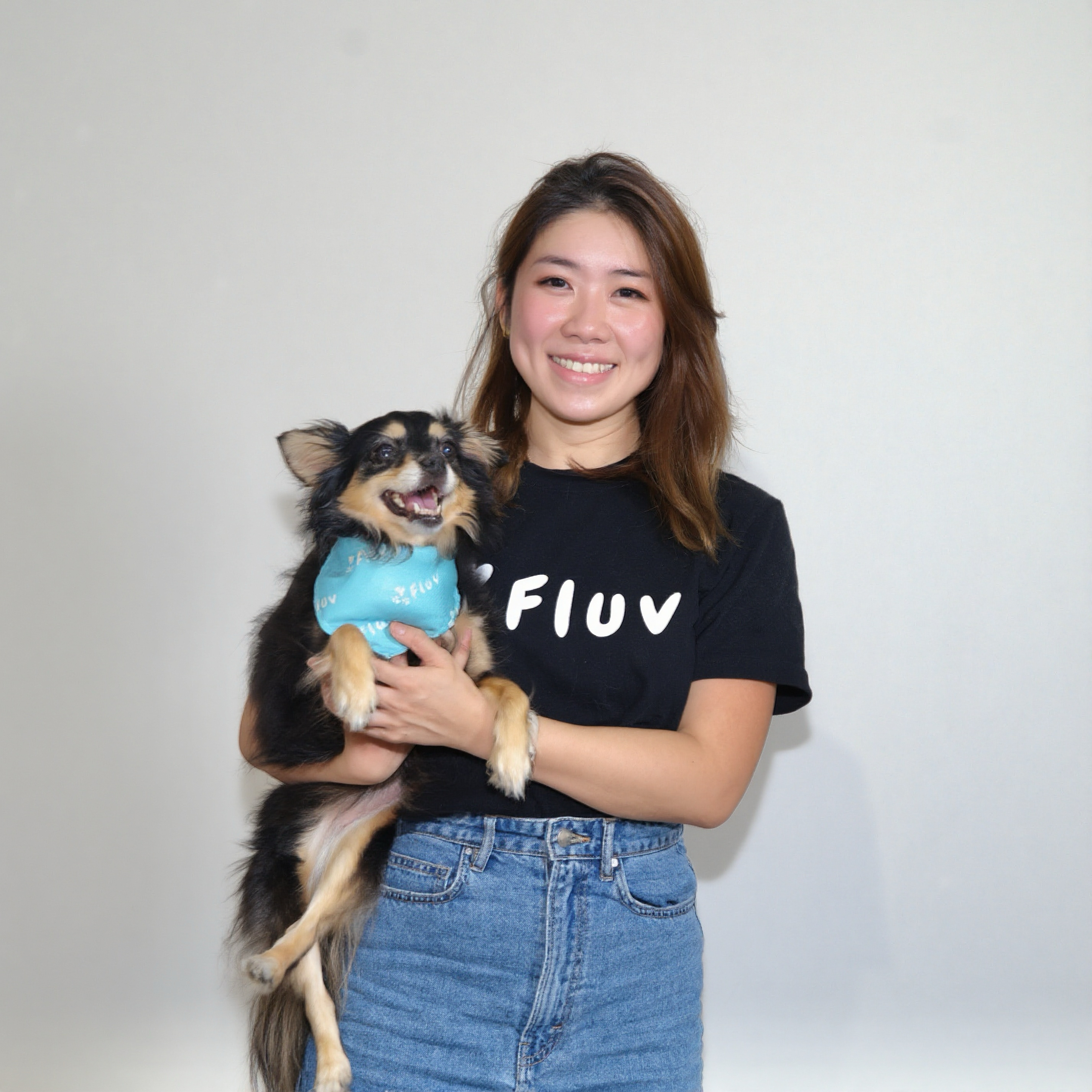
Fluv founder Candace Chen
Forbes 30 Under 30 Asia | 2024 Tatler Gen.T Leaders of Tomorrow
As the founder of Fluv, Candace has combined exceptional business vision with hands-on execution to build the platform into Taiwan’s largest and most trusted pet care service.
- World-class recognition: Named to the Forbes 30 Under 30 Asia list and selected as a 2024 Tatler Gen.T Leader of Tomorrow.
- Backed by leading investors: Secured investment from Twitch co-founder Kevin Lin and influential venture firm SIC.
- Market leader: Led Fluv to a community of over 7,000 vetted professional sitters, trusted by more than 140,000 members.
Further reading:
Should your dog stay at a dog hotel? A complete guide to dog boarding costs and pre-stay checklist
The complete guide to cat boarding costs: cat hotel pricing and long-term cat boarding fees at a glance
Views: 2775
 English
  Chinese