
Table of contents
-
- Pet boarding, long-term boarding, and daycare — what’s the difference? One table to understand your options
- How is long-term pet boarding cost calculated? How to estimate costs for dogs and cats?
- Pet hotel or home-based boarding — which should you choose?
- Boarding essentials: contracts and risk management
- Your boarding contract must include medical authorization and insurance
- Risk identification and things to watch out for
- Frequently asked questions about pet boarding
Pet owners often need care solutions for their pets due to real-life circumstances like business trips, moving house, or going abroad. How exactly is long-term pet boarding cost calculated? What’s the difference between long-term boarding, regular boarding, and daycare? How does home-based boarding differ from institutional pet hotels? How should you estimate dog boarding costs? Whether you need the short-term flexibility of one month of pet boarding or the long-term stability of a full year, this article walks you through everything — including how to handle contracts and medical authorization.
Pet boarding, long-term boarding, and daycare — what’s the difference? One table to understand your options
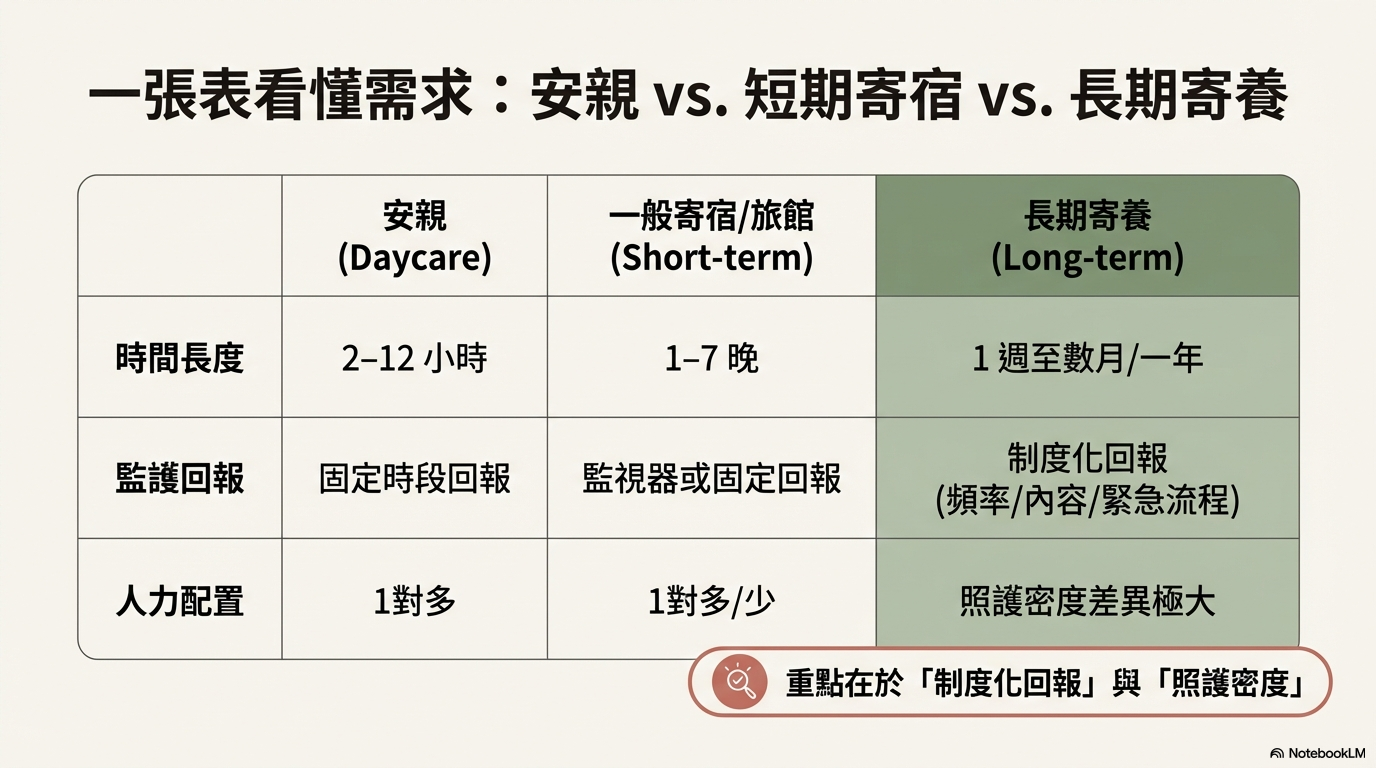
Many people lump “boarding, lodging, and daycare” together — and then get confused when quotes seem similar but the services are worlds apart. Long-term boarding isn’t simply extended short-term boarding. It’s more like a “small-scale care project” that requires more rigorous processes and clearly defined responsibilities. Use the table below to quickly figure out which type of care you actually need.
| Type | Overnight stay | Duration | Visibility (updates/video calls) | Staffing | Best for |
| Daycare | No | 2–12 hours | Pet hotels tend to update at fixed intervals; pet sitters tend to update more frequently | One-to-many | Daytime care during work hours, short outings |
| Regular boarding / pet hotel (short-term) | Yes | Typically 1–7 nights | Pet hotels tend toward fixed updates / CCTV; pet sitters tend to update more frequently | One-to-many or one-to-few | Weekend trips, short business trips |
| Long-term boarding (extended stay) | Yes | 1 week to several months or even a year | “Systematic updates” (frequency, content, emergency protocols) | Care density varies enormously | Extended time abroad, moving / renovation, gaps in care coverage |
Simply put, long-term boarding is not just short-term boarding stretched out. It’s more like a “small-scale care project” — pet owners need to understand the process, the update rhythm, and the boundaries of responsibility. Getting all of this in writing is strongly recommended, and there’s quite a bit to be aware of.
How is long-term pet boarding cost calculated? Cost estimation scenarios for cats and dogs

When it comes to the cost question that pet owners care most about, long-term boarding cost is not simply “nightly rate × number of nights.” Here’s how the actual calculation works (which can also serve as a checklist when communicating with your service provider):
Base nightly rate × number of nights
+ (extended hours / additional pets / dog walking / grooming / transportation / specified update frequency / medication care / peak season surcharge / cleaning fee)
Here’s a quick overview of general market rates:
- Pet hotels / accommodation: typically around $500–$3,000/night (varies by size, room type, city, and care content).
- In-home pet sitter visits: typically $400–$800 per visit; overnight stays around $800–$1,500/night (depending on service content, distance, and add-ons).
- Long-term estimate: For a year-long boarding arrangement, rough estimates are around $300–$800/day for dogs and $200–$500/day for cats, though final pricing depends on actual service content.
To give you a clearer sense of what to budget, here are some sample scenarios for dog boarding costs and cat boarding at different durations:
1. Short-term, one week (7 nights): small dog needing companionship and daily updates
- Base nightly rate: $900/night × 7 = $6,300
- Daily dog walk: $150/session × 7 = $1,050
- Estimated total: $6,300–$8,500 (depending on whether dog walking and video update add-ons are included)
2. One month of pet boarding (30 nights): medium-sized dog needing regular exercise
- Base nightly rate: $800/night × 30 = $24,000
- Long-stay discount: commonly around 10% off, bringing it to $21,600 (discount structures vary by provider)
- Grooming: 2 baths per week, 8 sessions per month, $600 × 8 = $4,800 Estimated total: $22,000–$30,000
3. One year of pet boarding (365 nights): cat with a sensitive temperament needing its own space
- Based on an average daily rate of $200–$500.
- Estimated annual cost: approximately $70,000–$180,000 (add-on medical reserve funds and special care packages not included)
Pet hotel or home-based boarding — which should you choose?
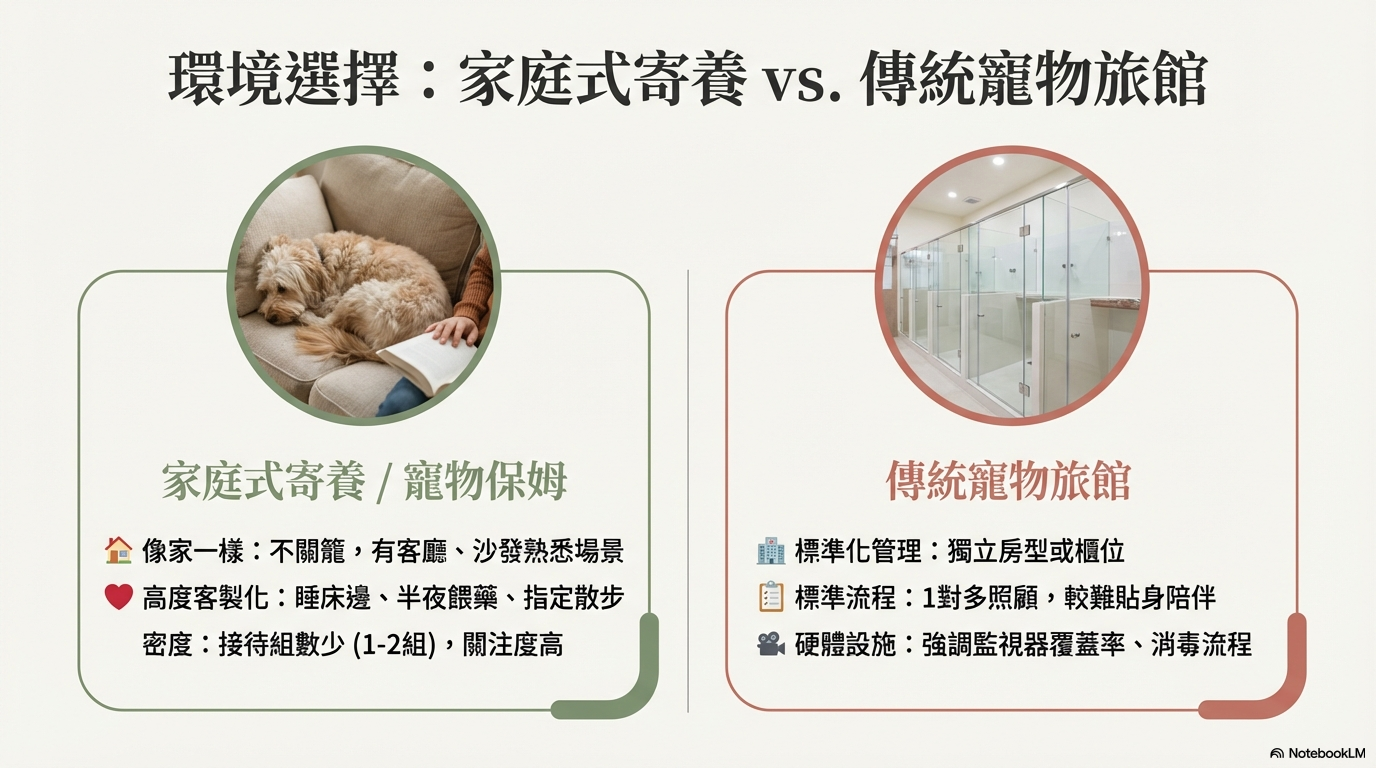
Home-based boarding vs. pet hotel
As attitudes toward pet ownership evolve, more and more pet owners heading abroad or on extended business trips are opting for home-based boarding. Unlike the standardized management of a traditional pet hotel, home-based boarding emphasizes a warm, homey atmosphere — “just like being at home.” But which model is right for your pet? Here are three dimensions to consider:
| Evaluation dimension | Home-based boarding (pet sitter) | Traditional pet hotel |
| Space and wellbeing | 🏠 Cage-free home living Environment: Familiar settings like living rooms and sofas help reduce anxiety in unfamiliar surroundings. Density: Fewer guests at a time (typically 1–2 groups), with more space and attention. |
🏢 Individual room or kennel management Advantage: High safety, reduced contact with unfamiliar animals. Disadvantage: Limited activity space — pets used to roaming freely at home may become restless. |
| Care | ❤️ Highly personalized & one-on-one Routine: Sleeping by the bed, midnight medication, designated walking routes. Special care: Suitable for senior pets or those needing bladder expression / subcutaneous fluids — abnormalities can be caught quickly. |
📋 Standardized process Format: Usually one caregiver to multiple pets. Limitations: Difficult to provide constant one-on-one companionship or fully accommodate special routines. |
| Safety | 🛡️ Emphasis on vetting Platform screening: Book through a certified platform (such as Fluv) to avoid inexperienced individual sitters. Site walkthrough: Confirm door and window safety and how resident pets interact with guests. |
📹 Emphasis on physical facilities Key points: Check CCTV coverage, kennel size, and sanitation protocols. |
| 📌 Best for | ✅ Velcro pets and anxious types Sensitive pets, those with separation anxiety, senior or unwell animals, and pets that have never stayed away from home. |
✅ Social butterflies and adventurous types Pets that love making friends, adapt easily, and enjoy open grounds or play equipment. |
Your pet’s personality is the best guide
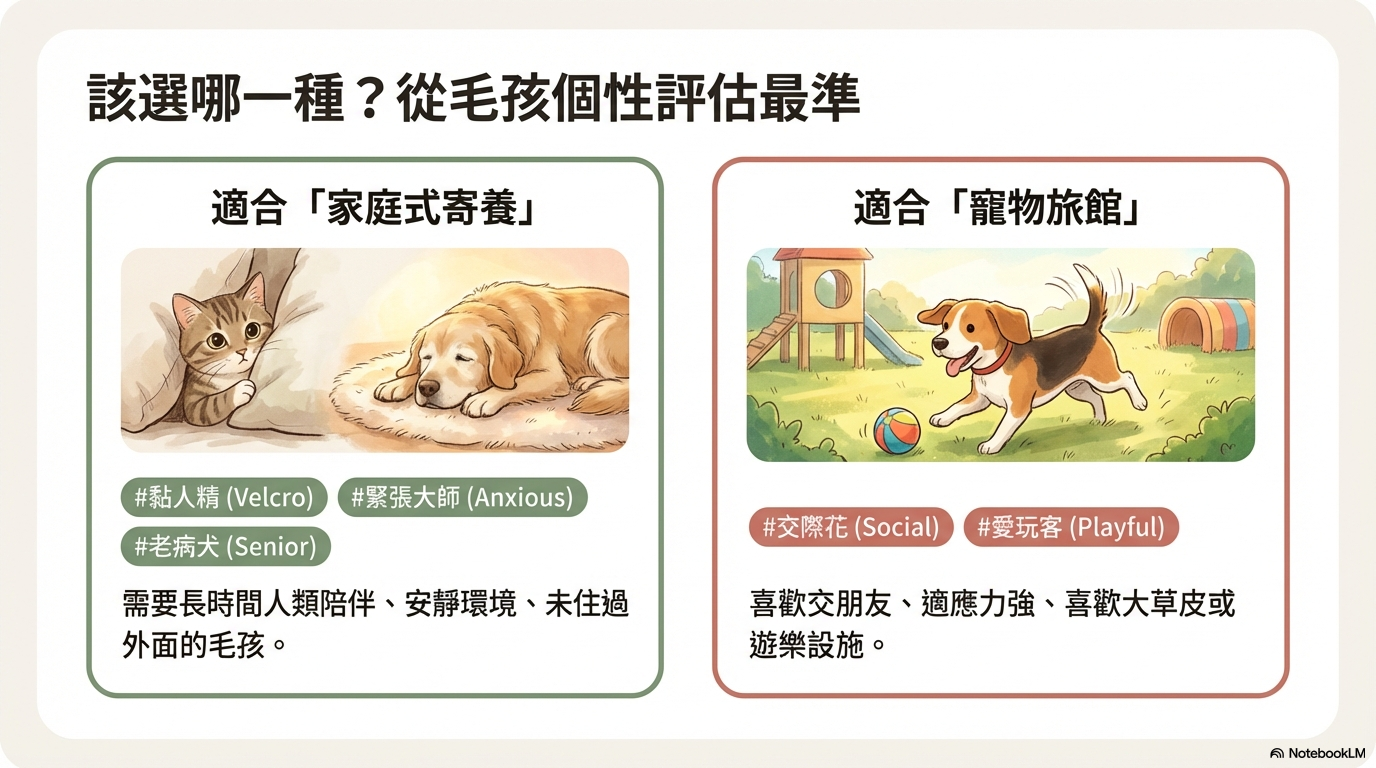
For pet owners, the most important thing is finding an arrangement you’re comfortable with. When you’re away, you naturally want your pet to be well cared for. But beyond cost, pay attention to co-habitation density, nighttime staffing, emergency response, and defined responsibilities.
| Evaluation criteria | Situation / risk analysis | Recommendations and key things to observe |
| Co-habitation density | Social pets: May thrive in open, shared spaces.
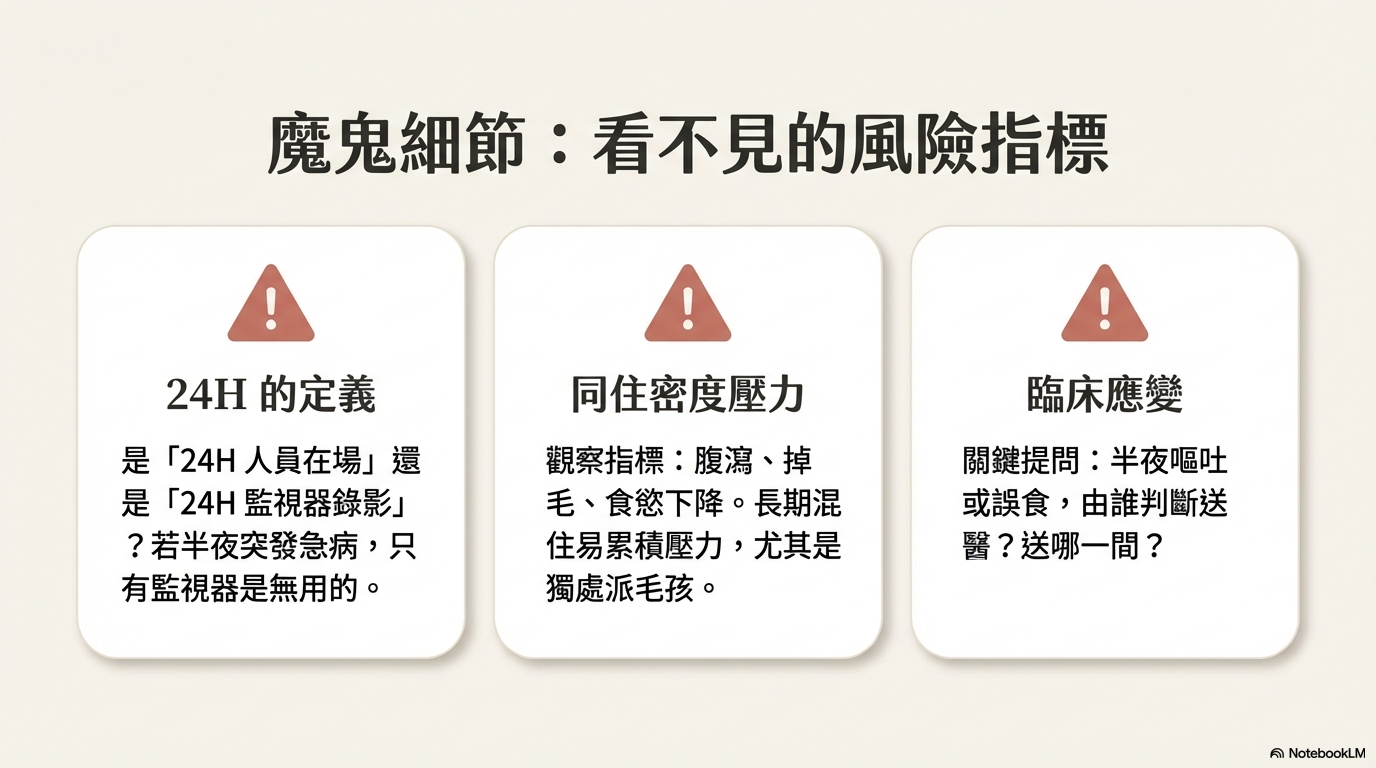
Solitary pets: Sensitive, food-protective, or noise-averse pets can build up stress over time in group living. ⚠️ Stress signs: Diarrhea, hair loss, decreased appetite, increased aggression. |
Home-based boarding: Advantage is controllable guest numbers, better for sensitive pets. Institutional boarding: Advantage is standardized equipment and processes. 👉 Always choose the environment based on your pet’s personality. |
| Nighttime staffing | Many facilities advertise “24H” care, but in reality this often just means “24H CCTV recording” with no one physically present.
⚠️ Risk: Everything looks fine during the day, but emergencies at night (sudden illness, injury) go unaddressed and unreported. |
Knowing “who is physically present” matters more than “is there a camera.”
Always ask whether a caregiver is physically on-site overnight. |
| Emergency response | Common emergencies: vomiting at night, seizures, ingesting something harmful, injuries.
⚠️ Grey areas: When something happens, who decides to go to the vet? Who covers the cost? |
Clarify the SOP details: 1. Which vet clinic will be used? 2. How will costs be advanced and calculated? 3. How soon after an incident will the owner be notified? |
| Defined responsibilities | Boarding cannot guarantee “zero risk.”
⚠️ Common disputes: Damaged belongings, lost pets, contagious illness outbreaks. |
What matters most is whether the post-incident process is clearly defined. Make sure the contract specifies evidence preservation and liability attribution to protect both parties. |
In summary, the choice between home-based boarding and a pet hotel should center on your pet. If your pet is a social butterfly who loves playing with others, a pet hotel with open grounds and play equipment could be a great fit. But if your pet is a velcro type or easily anxious — needing extended human company and a quiet environment — then home-based boarding is almost certainly the more reassuring long-term choice.
Boarding essentials: contracts and risk management

For pet owners, the hardest part of long-term boarding is often not the distance of separation — it’s the anxiety of not being able to check in at any moment. Building a lasting, healthy care arrangement can’t rest on verbal promises alone. It requires a written contract and medical authorization.
But before you sign anything, it’s worth understanding how to set up reasonable update schedules and communication boundaries — so the contract becomes a source of reassurance for both sides.
How often should updates be? What’s a reasonable frequency?
- Scheduled updates (e.g., 1–2 times per day)
Including: eating/drinking, bathroom habits, activity, mood, sleep, photos/short videos. - Event-based updates (immediate)
Including: vomiting, diarrhea, refusing food for more than X hours, injury, fighting, suspected infection, vet visits.
It’s best to define in advance — in the contract or chat records — what counts as a delayed update, so both sides are clear.
Visits and video calls: it’s not about what you want — it’s about avoiding added stress
Some pets become more anxious when they see you on video (they think you’ve disappeared again when you hang up), while others are calmed by it. The recommended approach: start by building trust through scheduled updates, then add a “weekly video call” if things seem stable. If your pet becomes distressed during video calls, drop them and switch to photos and short clips instead.
Your boarding contract must include medical authorization and insurance
The most valuable part of long-term boarding is accountability — and the vehicle for accountability is the contract and medical authorization documents. Taiwan actually has a standardized contract template for dog and cat boarding that’s worth referencing, covering review periods, information disclosure, overtime fees, and cancellation fee limits.
For example: if the prepaid amount exceeds a certain threshold or the boarding period exceeds 30 days, the review period is extended accordingly.
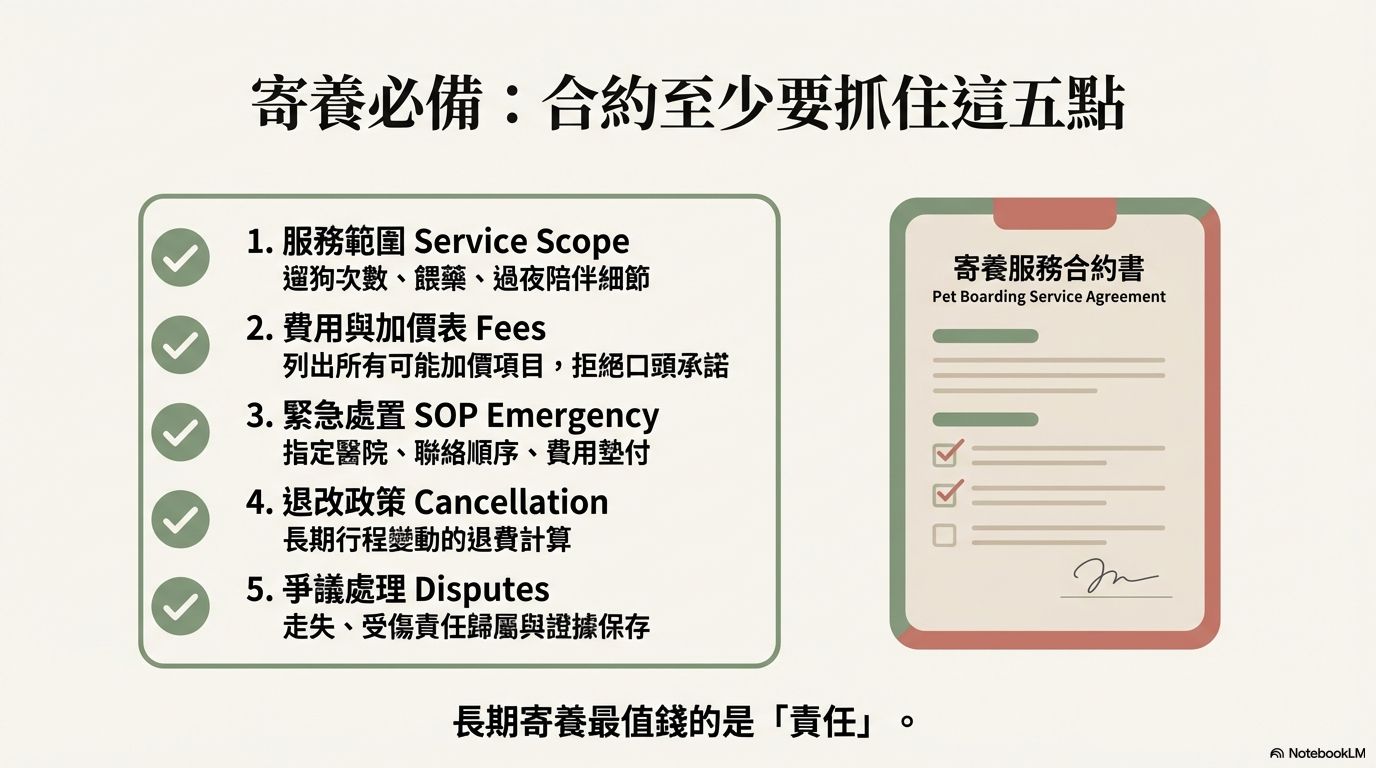
Five things your contract must nail down
- Clear scope of service: Does it include overnight companionship, how many walks per day, medication administration, update reports, and what format those updates take?
- Pricing and add-on schedule: List every item that could incur an additional charge — don’t leave it to verbal promises.
- Emergency and vet visit SOP: What triggers a vet visit, which clinic to use, the notification chain, and how costs are advanced.
- Cancellation and early termination: Schedule changes happen all the time in long-term arrangements — agree on the refund calculation upfront.
- Dispute resolution and liability boundaries: Lost pet, injury, infection, damaged belongings — define responsibilities and evidence requirements.
What to include in a medical authorization document
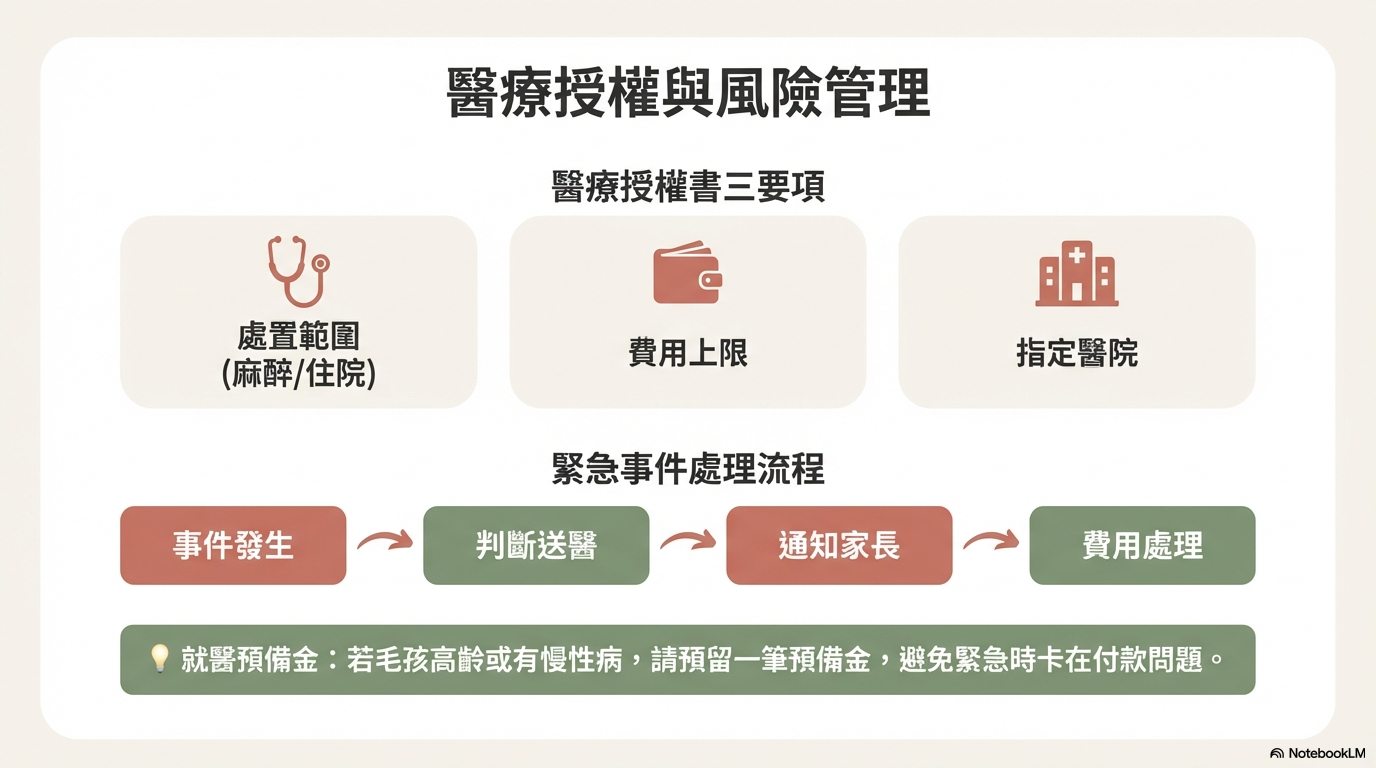
At minimum: owner identification, pet’s basic information, acceptable scope of medical treatment (e.g., consent to anesthesia, consent to hospitalization), cost limit or notification threshold, designated clinic, and emergency contact person.
Insurance and emergency reserve funds:
If your pet has a chronic condition or is elderly, setting aside a “medical reserve fund” or pre-agreed payment mechanism in advance prevents the painful situation of having to decide on the spot whether to authorize treatment when you’re thousands of miles away.
Risk identification and things to watch out for
When selecting a long-term boarding arrangement, what pet owners should be most alert to isn’t how friendly the provider seems — it’s these grey areas:
- Vague definition of “24H”: does it mean a person is on-site 24 hours, or just that there’s a 24-hour camera?
- Non-transparent staffing ratios: how many pets are being cared for at once? Who’s there overnight?
- Overcrowding: dogs and cats mixed together, unclear separation zones, sanitation processes that can’t be explained clearly.
- Delayed incident reporting: something happens and you’re not told until the next day.
- Unclear add-on charges: you think it’s one flat rate, but end up paying extra for every little thing.
- Refusing to share the contract in advance: for any long-term arrangement, if they won’t even give you time to review the contract, that’s a red flag — we wouldn’t recommend them.
Frequently asked questions about pet boarding
Q1: How do I get an accurate estimate of long-term pet boarding costs?
Start with “base nightly rate × number of nights” as your floor, then build out a list of add-ons — medication, dog walking, update frequency, peak season surcharges, transportation — and confirm each item individually. Market rates vary widely: pet hotels run roughly $500–$3,000/night; pet sitters and in-home services have different pricing structures. The key is to ask clearly what’s included.
Q2: Is home-based boarding or institutional boarding better?
Look at your pet’s stress profile. Pets that are noise-sensitive, fearful of unfamiliar animals, or need companionship generally do better with home-based boarding where guest numbers are more manageable. Adaptable pets that do well with structure may be better suited to institutional settings. Don’t just compare prices — compare nighttime staffing, update protocols, and emergency vet SOPs.
Q3: What documents do I need to sign?
At minimum: a boarding contract (covering scope of service, add-on fees, cancellation terms, and liability boundaries) plus a medical authorization document. For long-term stays — especially those exceeding 30 days — it’s worth referencing the government’s standardized contract template to ensure full review periods and information disclosure.
Q4: Can I visit or do video calls? How often?
Yes, but start by establishing a stable rhythm through scheduled updates first, then layer in video calls. For some pets, seeing you on screen actually triggers separation anxiety. Try it once, observe their emotional response, and then decide whether to make it a regular thing.
Q5: How many days counts as “long-term”?
In practice, anything over 7 nights starts to raise questions about discounts, update systems, and daily routine management. Beyond 30 days, it’s best to handle it as a formal long-term care plan with a proper contract, since the risks and responsibilities increase significantly.
A note from Fluv | Turning “long-term boarding” into a manageable plan

Fluv special offers | Limited-time deals for pet lovers like you
#Give your pet the best — which means what fits them best
If you’re looking for a more personalized, home-like care experience for your pet, why not try Fluv’s home-based sitter service?
🎁 New users: enter promo code
#UNEW95
Book now and enjoy a 5% discount!
👉 Looking for a caring, professional pet sitter for your furry friend?

Fluv founder Candace Chen
Forbes 30 Under 30 Asia | 2024 Tatler Gen.T Leaders of Tomorrow
As the founder of Fluv, Candace has built the brand into Taiwan’s largest and most trusted pet care platform through exceptional business vision and execution.
- World-class recognition: Named to Forbes 30 Under 30 Asia and selected as a 2024 Tatler Gen.T Leader of Tomorrow.
- Backed by top investors: Successfully secured investment from Twitch co-founder Kevin Lin and influential venture fund SIC.
- Market leader: Led Fluv to bring together over 7,000 vetted professional sitters, earning the trust of 140,000 members.
Further reading:
How much does a pet hotel cost in 2026? Pricing for cats and dogs, and how it compares to a pet sitter
[Updated 2026] How to choose a cat hotel: room types, hygiene standards, and pricing essentials
Views: 3829
 English
  Chinese